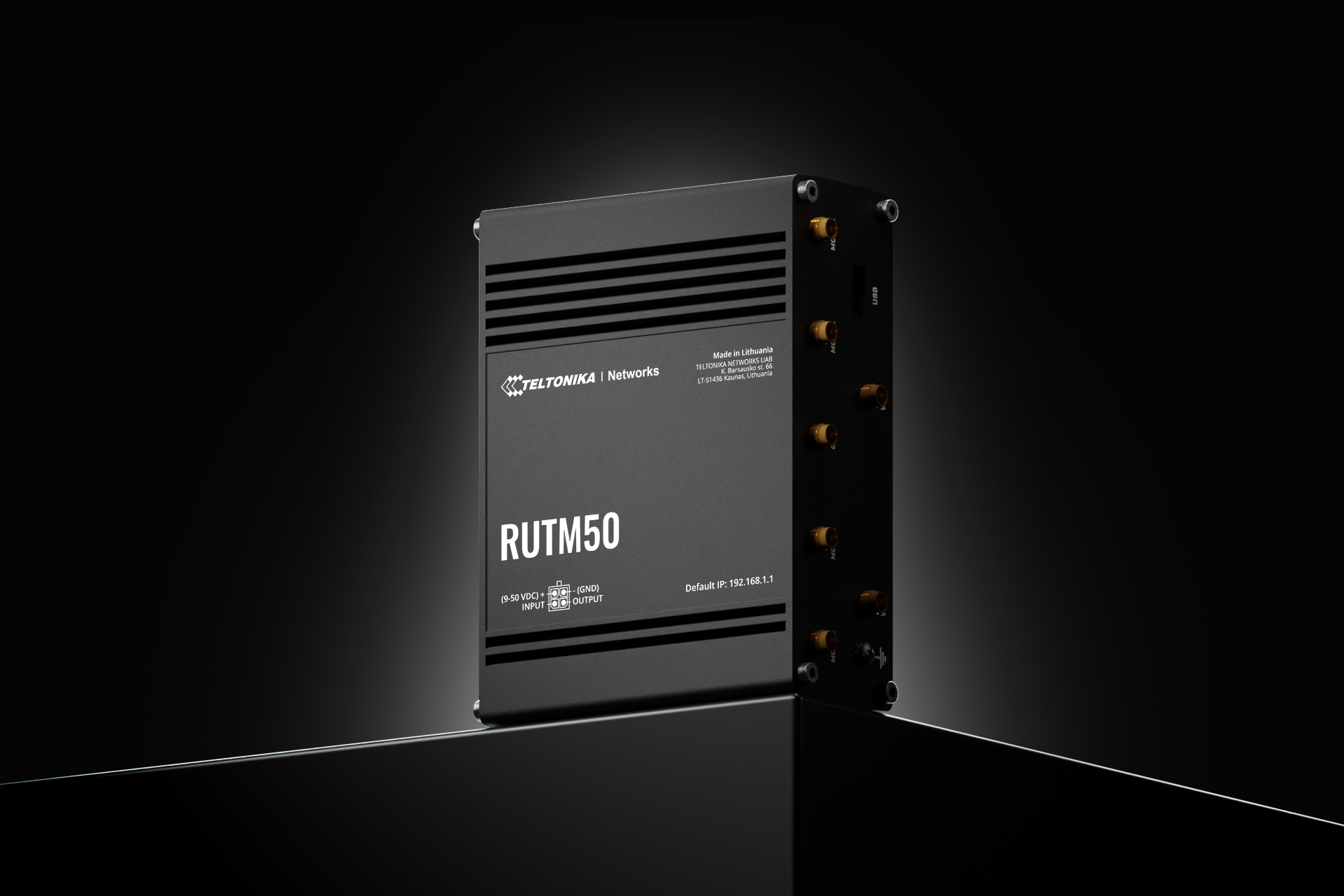
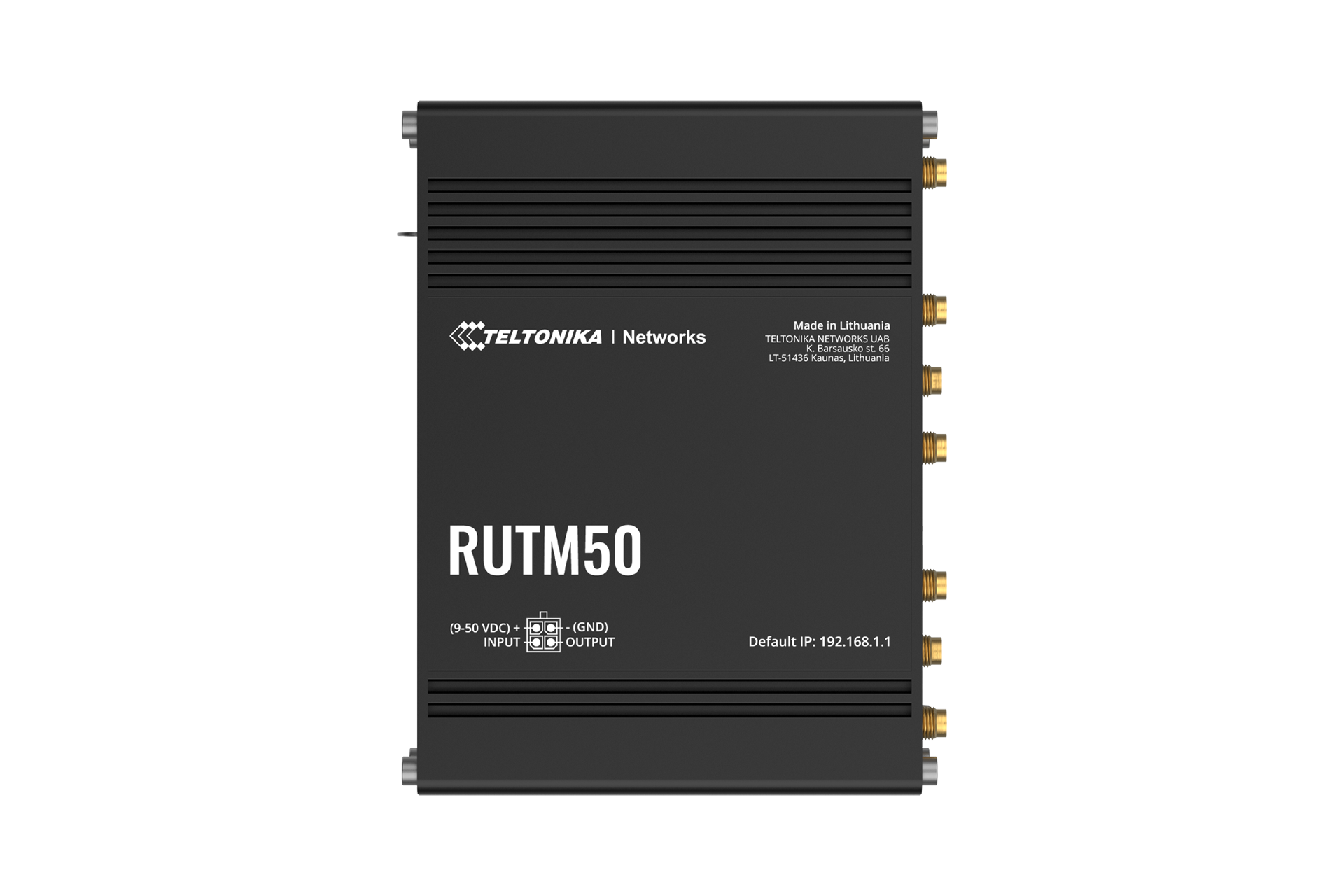
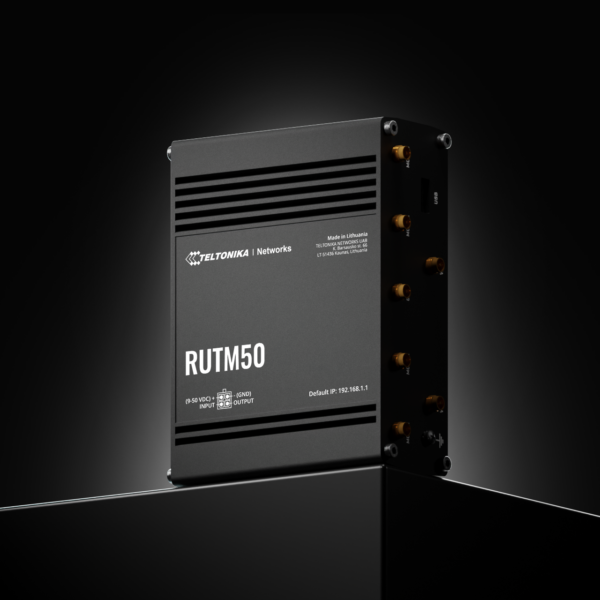
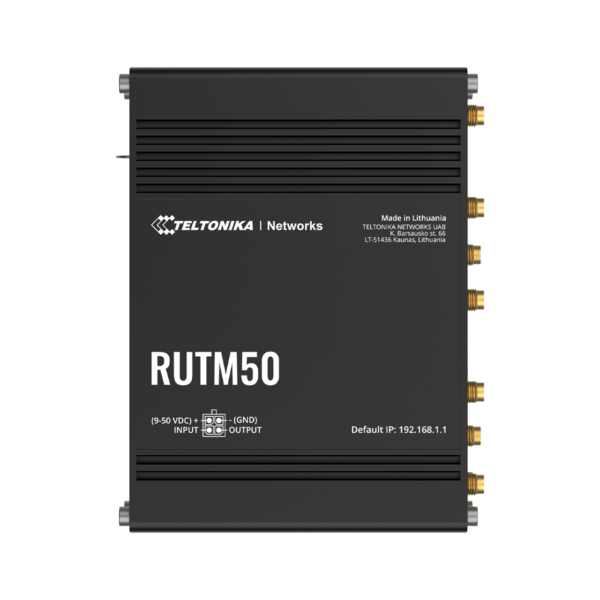
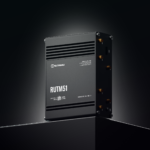
The Teltonika RUTM50 is an industrial 5G router designed to provide fast and reliable internet connectivity. It supports both 5G SA and NSA networks, with download speeds of up to 3.4 Gbps, along with 4G LTE Cat 19 for backward compatibility.
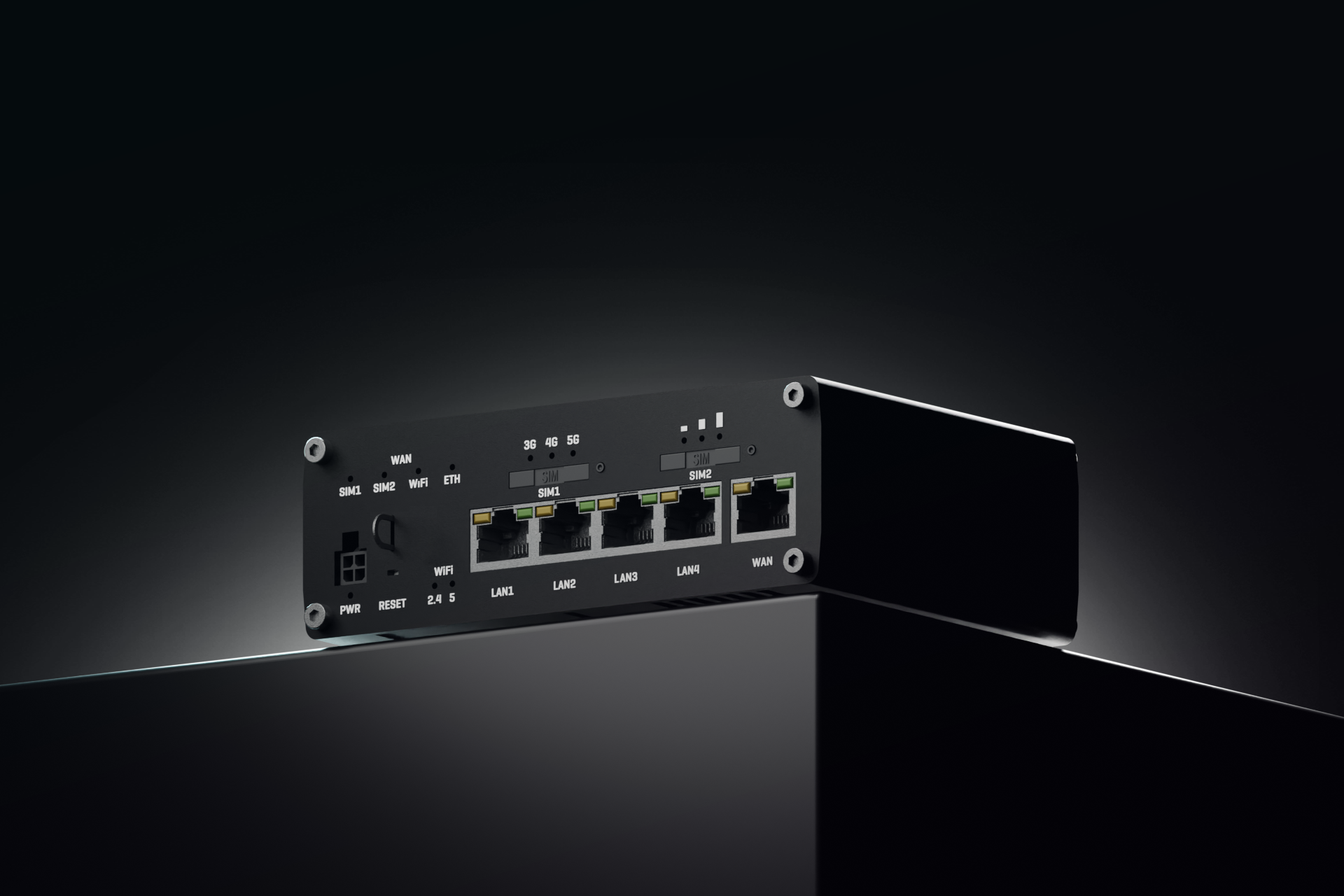
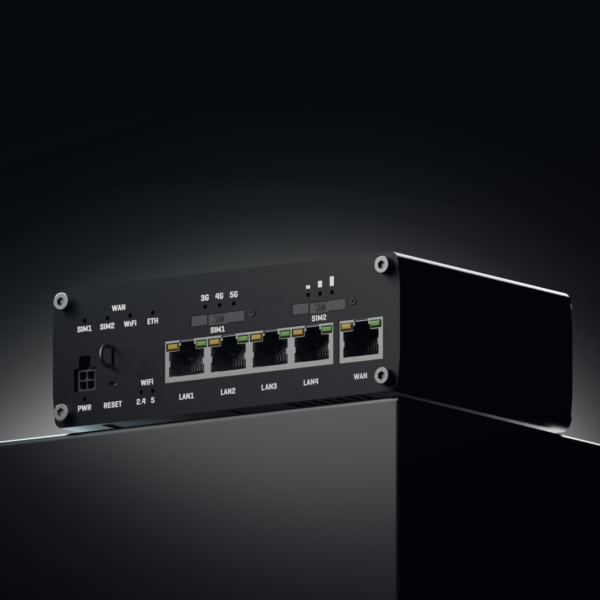
The router features two Mini SIM slots with automatic SIM switching to help maintain connectivity during weak signal conditions, roaming, data limits, or network failures. Its dual-band Wi-Fi 5 supports wireless speeds up to 867 Mbps and up to 110 simultaneous connections.
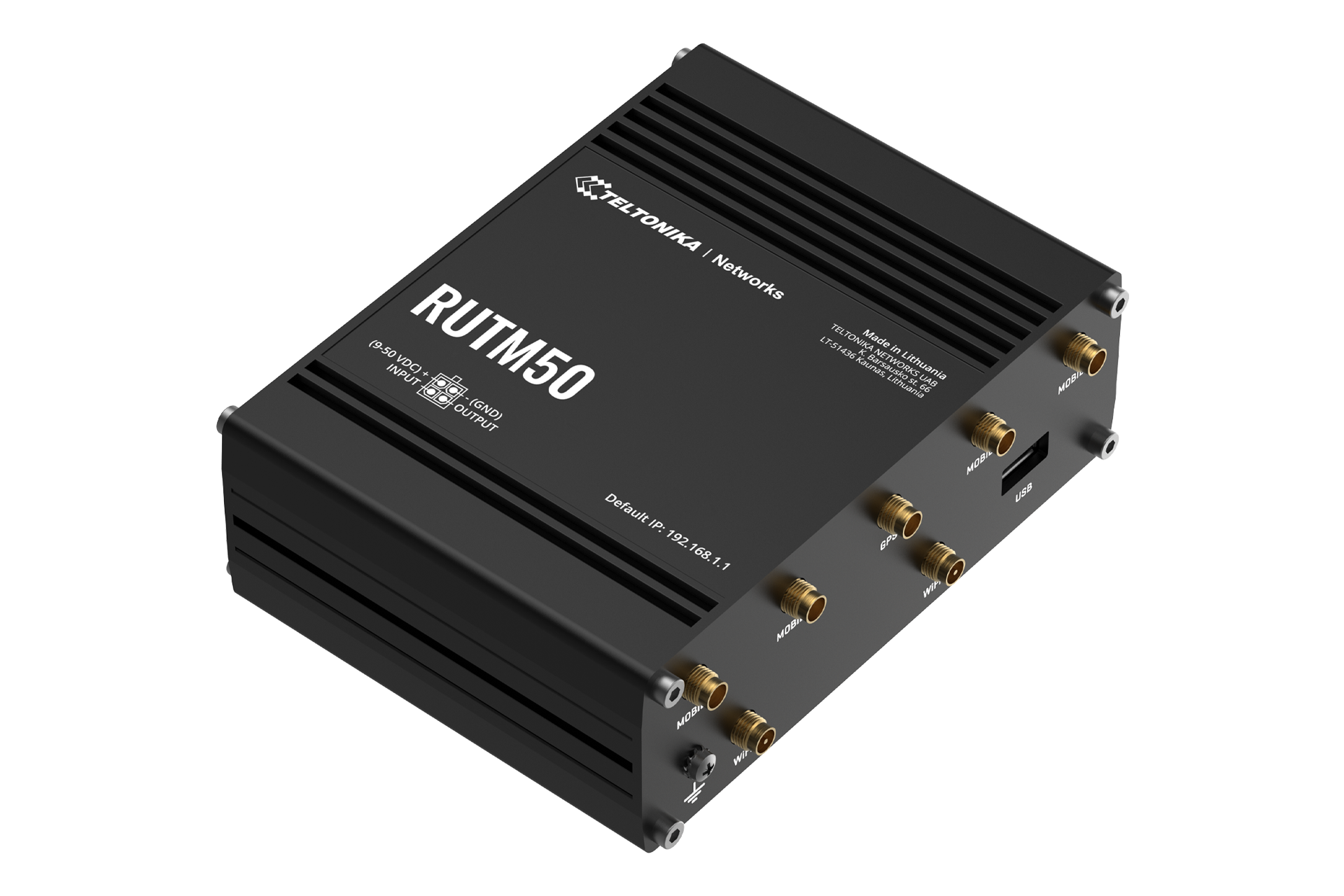
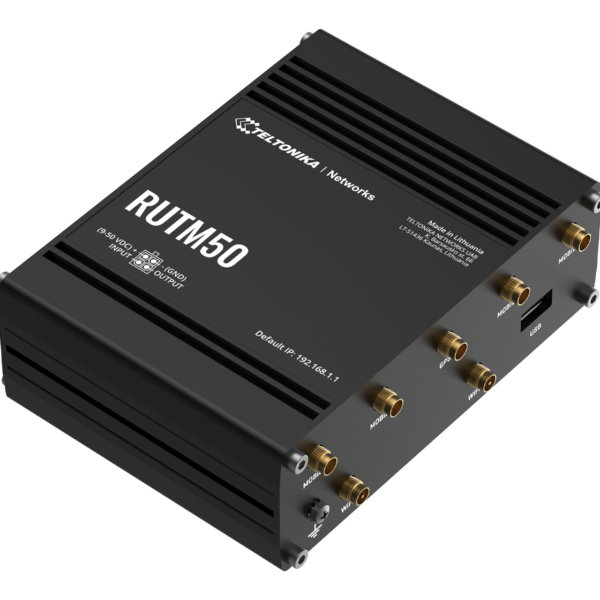
For wired connections, the RUTM50 provides five Gigabit Ethernet ports, including one WAN and four LAN ports. It also includes USB 2.0, GNSS location tracking, and digital input/output for additional connectivity and monitoring options.
With advanced features such as VPN, firewall, VLAN, load balancing, and network failover, the RUTM50 supports flexible network management. Running on RutOS, it also supports remote monitoring through Teltonika RMS and Site Manager. Teltonika RUTM50 its aluminium housing and IP30 ingress protection make it suitable for industrial and commercial networking environments.
Key Features
High-Speed 5G Connectivity: Supports 5G SA/NSA with download speeds up to 3.4 Gbps.
4G LTE Cat 19: Provides backward compatibility with 4G LTE networks.
Dual SIM Support: Two Mini SIM slots with automatic SIM switching and failover.
Wi-Fi 5: Dual-band MU-MIMO wireless connectivity with speeds up to 867 Mbps.
Gigabit Ethernet: Five RJ45 ports, including one WAN and four LAN ports.
Best Suited For
Industrial and commercial networking applications.
Business locations requiring high-speed 5G connectivity.
Remote sites requiring dual SIM backup connectivity.
Networks connecting multiple wired and wireless devices.
Industrial applications using supported communication protocols.
Not Suited For
Outdoor installations requiring waterproof protection.
Applications requiring Wi-Fi 6 or Wi-Fi 7.
Setups requiring more than five built-in Gigabit Ethernet ports.
Applications requiring integrated RS232 or RS485 physical ports.
Networks requiring standard IEEE 802.3af/at/bt PoE input.

 HD Cameras and Webcam
 Projectors and Speakers
 VOIP Phones and Gateway

 Access Control
 5G routers and 4G LTE Devices
 Smart Sensors And Automation

 Fiber and SFP Modules
 Firewall & Cloud Controllers
 Network Adapters and Accessories
 Network Switches
 PoE Switches
 Point To Point Wireless Radio
 Routers
 Wireless Access Points

 IP Cameras
 Memory Cards
 NVR
 Smart WiFi Cameras
 Storage Devices

 Desktop & Laptop RAMs
 Internal and External Hard Drives
 Storage Accessories and Enclosures
 SSD and NVMe Drives
 USB Flash Drives



 Pick up from the FGTECH Store



 Pick up from the FGTECH Store
 Courier delivery