
 HD Cameras and Webcam
 Projectors and Speakers
 VOIP Phones and Gateway
 Access Control
 LTE and 5G Devices
 Smart Sensors And Automation
 Fiber and SFP Modules
 Firewall & Cloud Controllers
 Network Adapters and Accessories
 Network Switches
 PoE Switches
 Point To Point Wireless Radio
 Routers
 Wireless Access Points
 IP Cameras
 Memory Cards
 NVR
NVR Smart WiFi Cameras
 Storage Devices
 Desktop & Laptop RAMs
 Internal and External Hard Drives
 Storage Accessories and Enclosures
 SSD and NVMe Drives
 USB Flash Drives


Which P2P Wireless Should You Buy? | Real-World Comparison: TP-Link vs MikroTik vs Ubiquiti vs Mimosa

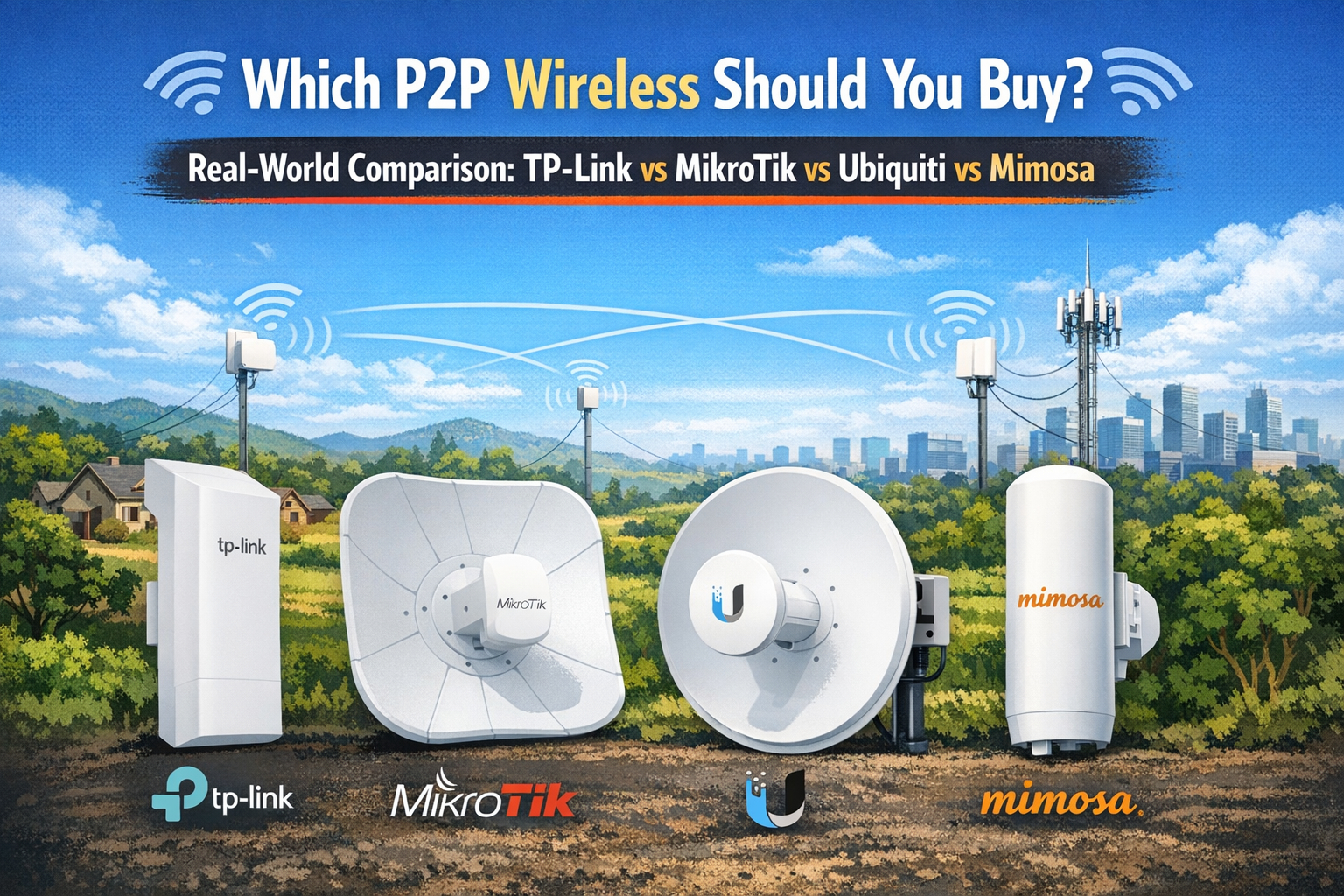
Point-to-point (P2P) wireless bridges are essential for extending internet between buildings, CCTV backhaul, and ISP backbone links. This blog analyzes a detailed comparison video covering TP-Link, MikroTik, Ubiquiti, and Mimosa P2P radios to help you choose the right one for your needs.
Why P2P Wireless Matters
P2P wireless solutions create high-speed links between two fixed locations without digging fiber or running cables. They work best with clear line-of-sight (LOS) and are popular for:
- CCTV camera backhaul to NVRs
- Sharing internet between homes/buildings
- ISP backbone connections
- Rural internet extension
Key factors include range, throughput, noise immunity, proprietary protocols, and ease of deployment
Devices Compared
The video evaluates four brands across budget and performance segments.
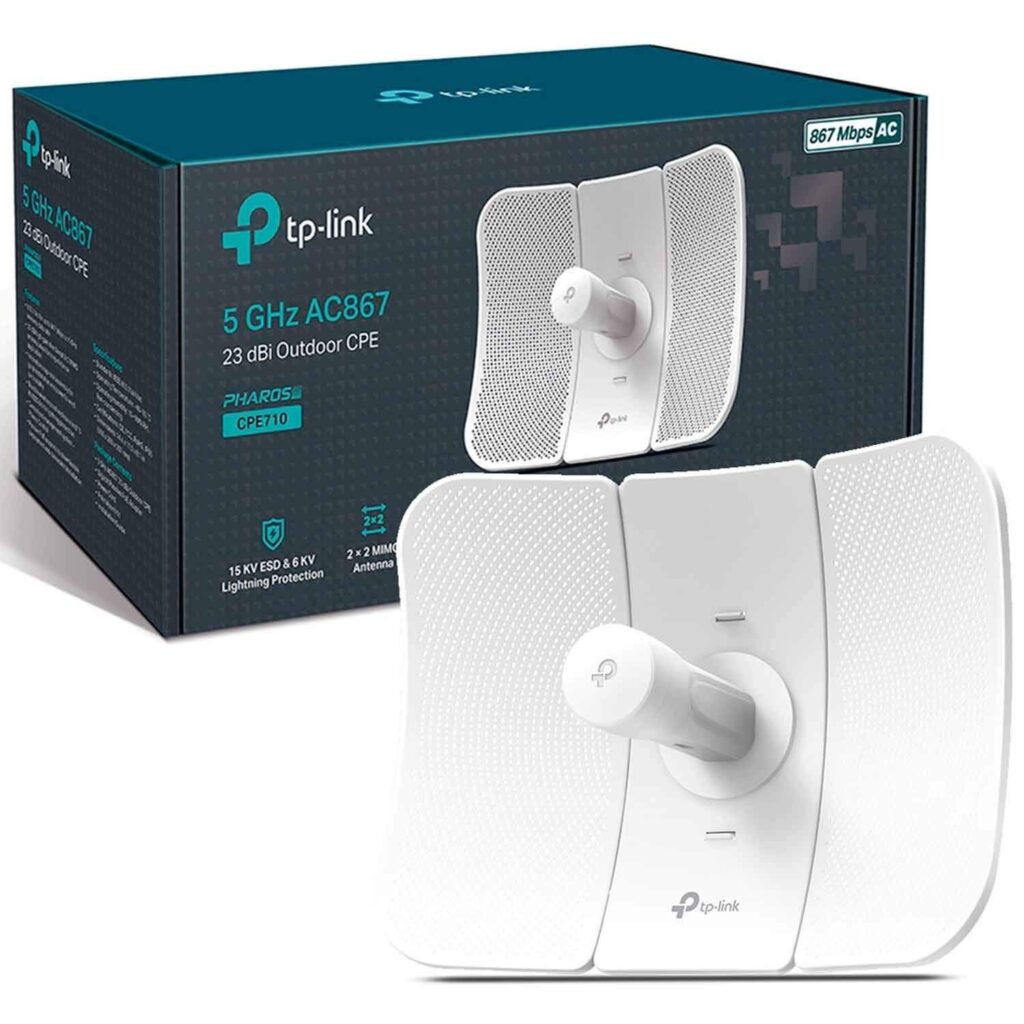
TP-Link CPE Series (Budget Entry-Level)
- Models: CPE610 (non-AC, 100 Mbps port), CPE710 (AC, Gigabit port)
- Specs: 23 dBi directional antenna, 5 GHz, up to 30 km range, 2×2 MIMO MAXtream TDMA
- Best for: CCTV backhaul, short-mid range (1-4 km), simple deployments, internet sharing
- Pros: Affordable, easy setup, third-party compatible, India-wide service centers
- Cons: 100 Mbps port limit on CPE610, basic performance

MikroTik LHG Series (Advanced/ISP Grade)
- Models: LHG 5, LHG 5 AC, LHG 5 AC XL, SXTsq 5 ac
- Specs: 24.5-27 dBi grid antenna, RouterOS, NV2/Nv2 protocol, up to 19+ km links, Wi-Fi 6 (AX) options
- Best for: ISPs, long-range (5-20 km), noisy environments, scalable networks
- Pros: High gain antennas, full RouterOS control (VLANs, QoS), 1 Gbps ports
- Cons: License Level 3 limits PtMP to 1:1, steeper learning curve

Ubiquiti LiteBeam M5 AC Gen2 (Mid-Range Reliable)
- Models: LiteBeam M5 AC Gen2, PowerBeam series for longer range
- Specs: 23 dBi antenna, airMAX AC, Gigabit port, 450+ Mbps throughput, 5-10 km typical
- Best for: Stable mid-range links (up to 5 km), clean UI, quick installs
- Pros: airMAX protocol, noise immunity, UISP app management, lightweight
- Cons: Proprietary airMAX (requires Ubiquiti pairs), discontinued non-AC models

Mimosa C6x (High-End ISP/Carrier Grade)
- Models: C6x, C6 (Wi-Fi 6)
- Specs: 1.75 Gbps aggregate (2 Gbps PtP), 24 dBm TX, IP67, 8-30 dBi gain, 5150-6425 MHz
- Best for: High-capacity backbones, professional ISPs, noisy urban environments
- Pros: MU-MIMO, OFDMA, exceptional noise handling, used by Jio AirFiber
- Cons: Expensive, ISP-oriented (not for CCTV/home use)

Comparison Table
| Brand/Model | Range (km) | Throughput | Port Speed | Protocol | Best Use Case | Price Tier |
|---|---|---|---|---|---|---|
| TP-Link CPE710 | 1-4 | 867 Mbps | 1 Gbps | MAXtream TDMA | CCTV, short links | Budget |
| MikroTik LHG 5 AC XL | 10-20 | 450+ Mbps | 1 Gbps | NV2 | ISPs, long range | Mid-High |
| Ubiquiti LBE-5AC-Gen2 | 5-10 | 450+ Mbps | 1 Gbps | airMAX AC | Mid-range stable | Mid |
| Mimosa C6x | 5-15 | 1.75 Gbps | 1 Gbps | MU-MIMO/OFDMA | ISP backbone | Premium |
Recommendations by Use Case
CCTV Installers & Short Links (1-4 km)
Pick TP-Link CPE710 – Affordable, easy, reliable for video backhaul + internet sharing. Pair with CPE610 if budget tight (100 Mbps limit).
Home/Neighbor Internet Sharing
TP-Link CPE710 or Ubiquiti LiteBeam AC Gen2 – Simple setup, stable 200-450 Mbps links.
ISP Backbone & Long Range (5+ km)
MikroTik LHG 5 AC XL – RouterOS flexibility, high-gain antenna for 10-20 km noisy links.
Professional ISP/High Capacity
Mimosa C6x – Carrier-grade performance for gigabit+ backbones, used by major ISPs like Jio.
Common Mistakes to Avoid
- No LOS: All require clear line-of-sight; buildings/trees kill performance.
- Proprietary Protocols: TP-Link MAXtream, MikroTik NV2, Ubiquiti airMAX need brand pairs.
- Overkill for CCTV: Mimosa too expensive for video; use TP-Link.
- MikroTik License Limits: Level 3 restricts PtMP to 1:1.
Quick FAQ
CCTV backhaul: TP-Link CPE710 or MikroTik?
TP-Link for simple 1-3 km video + internet. MikroTik for longer/more complex.
ISP backbone: Ubiquiti or Mimosa?
Mimosa C6x for high capacity/noise. Ubiquiti for mid-range reliability.
Longest range?
MikroTik LHG XL (19+ km tested) or Ubiquiti PowerBeam 620.
Budget under ₹10k/pair?
TP-Link CPE610/710 pair.
This guide helps match P2P radios to real-world needs rather than specs alone.