
 HD Cameras and Webcam
 Projectors and Speakers
 VOIP Phones and Gateway
 Access Control
 LTE and 5G Devices
 Smart Sensors And Automation
 Fiber and SFP Modules
 Firewall & Cloud Controllers
 Network Adapters and Accessories
 Network Switches
 PoE Switches
 Point To Point Wireless Radio
 Routers
 Wireless Access Points
 IP Cameras
 Memory Cards
 NVR
NVR Smart WiFi Cameras
 Storage Devices
 Desktop & Laptop RAMs
 Internal and External Hard Drives
 Storage Accessories and Enclosures
 SSD and NVMe Drives
 USB Flash Drives


Why Indian Tech buyers are choosing experience over price? Rise of Prosumer Homelabs, DIY NAS, and Open Source Networking in India

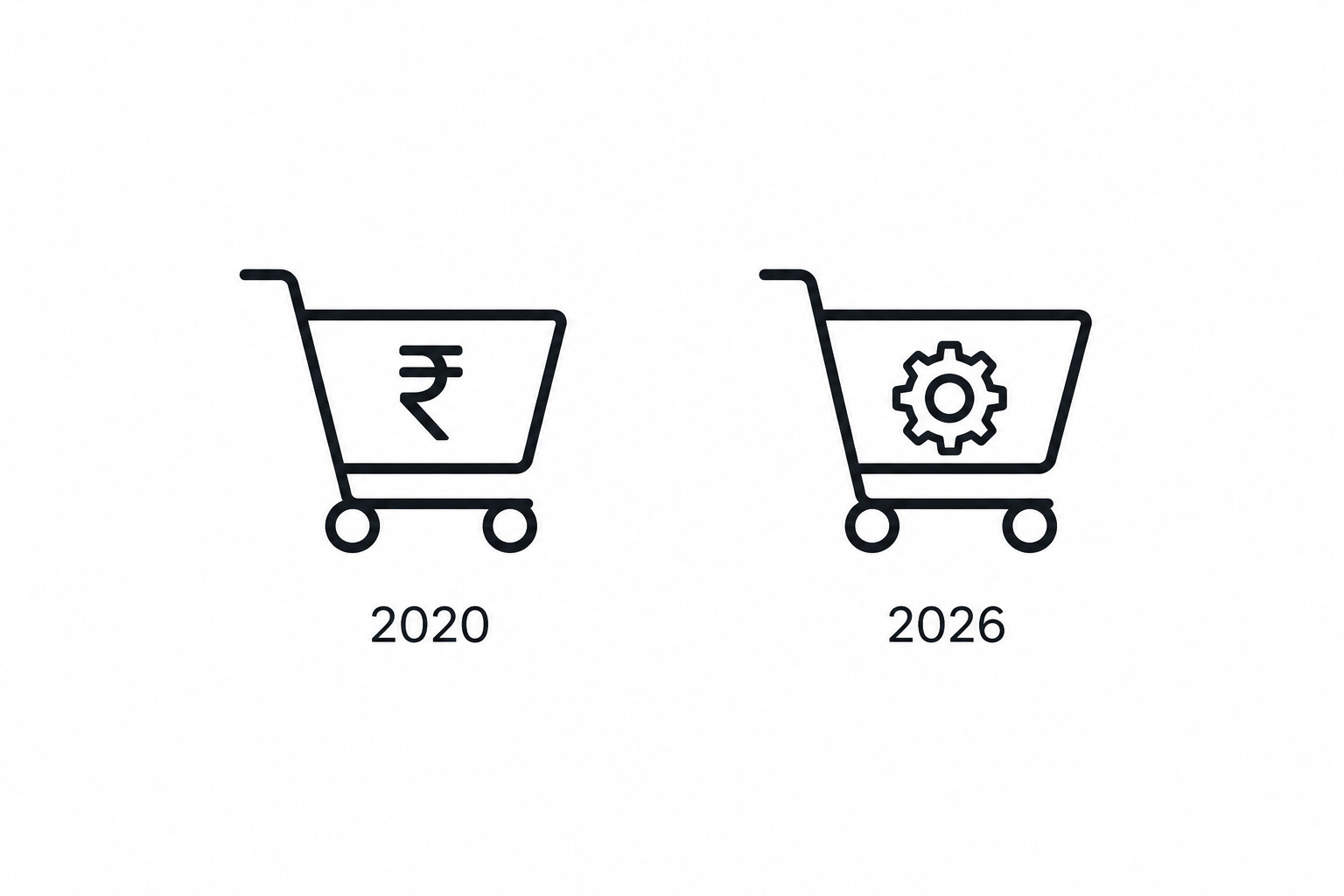
In this issue of Tech Tomorrow, we look at why a growing segment of Indian tech buyers has stopped optimising for the lowest price, and what that shift looks like when it reaches networking and infrastructure hardware.
Before we dive in, if you're someone who enjoys understanding how technology, business, policy, and infrastructure shape the products and services you use every day, join the community if you haven't already. We publish one in-depth edition every two weeks. And if you're already a subscriber, thank you. Consider forwarding this to someone who'd enjoy thoughtful deep dives into the forces powering the country around them.
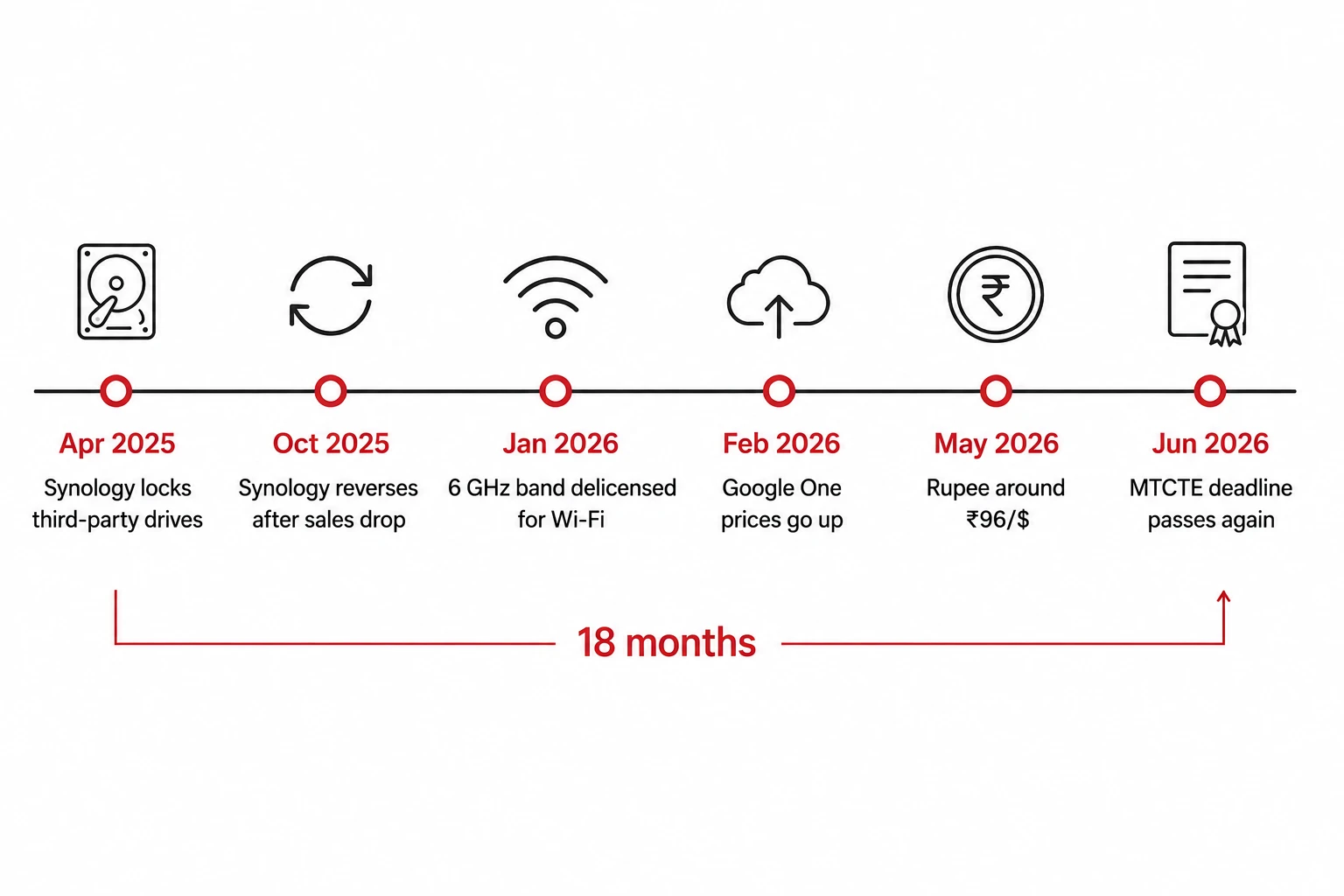
In April 2025, Synology, the Taiwanese company that dominates the consumer NAS market, announced that its entire 2025 Plus-series lineup would only accept Synology branded hard drives. No bypass, no workaround. A perfectly functional 8TB Seagate IronWolf, physically identical to the Synology-labelled version, wouldn't boot.
Sales reportedly dropped. By October, Synology released DiskStation Manager 7.3 and quietly reversed the restriction for 3.5-inch drives and SATA SSDs.
But the more interesting part came after the reversal.
A segment of Indian buyers didn't wait for the fix. They moved to TrueNAS and Unraid, open-source platforms that run on any hardware and accept any drive. They chose to build rather than buy, and they chose to pay more in time and effort for something no single company could lock them out of.
That decision only makes sense if you understand something that's been changing about Indian tech buyers for the last few years, quietly, across categories that have nothing to do with each other.
India has been a price sensitive market for as long as most of us can remember. The cheapest router wins. The cheapest switch wins. TP-Link built an entire market position in India by being the most affordable option in virtually every networking category.
For years, that logic held because affordable was genuinely good enough. A ₹1,500 router handled a 50 Mbps connection fine. A basic 5-port switch did its job.
But a growing segment of Indian buyers has moved past the ‘good enough’ tag.
Indian consumers are paying ₹45,000 to ₹55,000 for Bosch dishwashers instead of ₹25,000 for budget alternatives, because the Bosch handles hard water and heavy steel utensils for a decade without failing.
They're abandoning cheap RO purifiers with proprietary filter subscriptions in favor of heavy duty units with standard size filters they can service themselves.
They will pay significantly more when the premium delivers a genuinely better long-term ownership experience. And they'll walk away from products that take control away, regardless of the price.
What does "better ownership experience" mean in practice?
It's not just design or ease of use. It's better technology and performance. More control over what the hardware does and how it behaves. Open ecosystems that work across vendors instead of locking you into one. Freedom from subscriptions that make a product you already paid for feel rented. Reliability that lasts years, not until the manufacturer decides to sunset a cloud service.
"That psychology is now showing up in networking and infrastructure hardware".
Homelab is one of the clearest expressions of this shift.
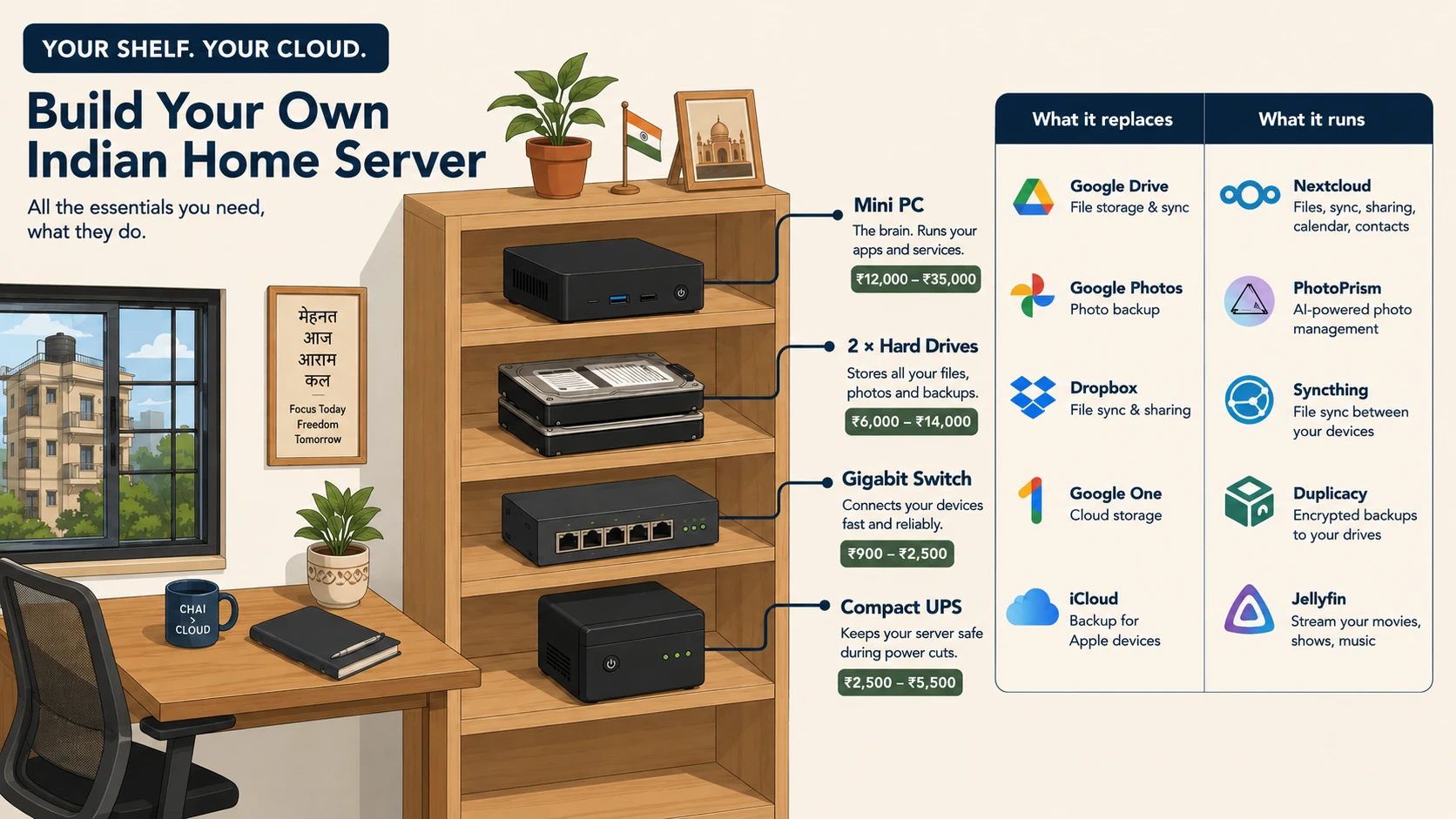
Indian redditors on r/homelabindia describe their design philosophy bluntly: "Local > Cloud. Reliable automations > gimmicks." They're replacing Google Photos with Immich or Photo Prism, self-hosted photo tools running on a 12TB NAS. Zero recurring fees, no 15GB free-tier ceiling, no risk of an account suspension erasing a decade of family photos.
Some of them have replaced their smart switches entirely, because a 'smart' light switch that stops working when a server in China goes offline is worse than the ₹30 mechanical one it replaced.
The alternative they've moved to, Zigbee switches running on Home Assistant, works without any cloud connection at all. A Raspberry Pi 5 running Jellyfin, Pi-hole, and Tailscale replaces three separate subscriptions with a setup the owner fully controls.
Prosumers are now spending ₹15,000 to ₹25,000 on a mini PC, similar amounts on drives, and investing hours in configuration. The savings are real at scale, but savings aren't the primary motivation. Control and quality of experience are.
What they're building away from is equally telling.
A lot of Indian buyers are currently scrolling past ‘AI-powered’ labels the same way they scroll past "mega sale" banners. What triggers rejection is more concrete.
Smart TVs pushing unskippable ads on their home screens within two years of purchase. Voice assistants that can't parse Indian accents reliably. Appliances that stop working entirely when a cloud service gets shut down.
Users setting up smart lighting for elderly parents have learned to install switches with physical toggles, because app-only controls that depend on Wi-Fi and a cloud server are less reliable for an elderly parent than the switch that was already on the wall.
And this is where a disconnect shows up.
Many of the prosumer buyers driving this shift were the earliest adopters of smart products. They bought in first. But the manufacturers haven't kept pace with what those buyers now expect.
Most Indian smart hardware runs on standard, open components underneath. The chips and protocols are capable of connecting to third-party apps and local platforms. But the firmware and cloud layer built on top locks that capability away.
The companies building these products often don't know the difference between what their hardware can do and what their software allows. Ask about third-party integration and the answer, across departments, is a blank stare.
The same friction appears in networking hardware.
Vendor-coded optics, modules engineered to work only with one brand's equipment, have been an industry norm for years.
In an era where prosumers and businesses build on multi-vendor setups, those locks create exactly the kind of friction that experience-first buyers refuse to tolerate.
Ubiquiti and MikroTik accept any generic SFP module, and both have built strong prosumer followings precisely because of that. Openness is the baseline, not the differentiator.
Now, none of this would be happening at scale without a set of infrastructure shifts that landed in India between early 2025 and mid-2026. None of these shifts created the demand. They removed the friction that had been sitting between the demand and the hardware.
In January 2026, India delicensed the lower 6 GHz band for indoor Wi-Fi, finally letting Wi-Fi 7 hardware run at full capability. The rupee's slide past ₹96 to the dollar pushed imported branded gear roughly 15% higher in cost. The MTCTE certification deadline was most recently set at June 30, 2026. That date has now passed, and TEC appears to have issued fresh notifications on June 30 and July 1, following the same pattern of extensions it has repeated seven times before.
Mini PCs from brands like Beelink and Minisforum, drawing under 15 watts and running silent, fit on a bookshelf in a 700 sq ft Mumbai flat where a rack-mount server never could.
And most Indian ISPs run Carrier-Grade NAT on home broadband, which essentially blocks all incoming traffic from the internet, making direct remote access to a home server impossible without tunnelling through services like Tailscale or Cloudflare.
That last point matters because it punctures the "cloud exodus" narrative.
Indian prosumers still depend on Tailscale, Cloudflare Tunnel, and offsite backups. They've kept the cloud. They've just taken back the workloads where cloud dependency added cost or friction without adding value.
Homelabs are a symptom. The underlying shift is simpler: a growing segment of Indian tech buyers has changed how it evaluates technology. The cheapest product is no longer automatically the best product.
Increasingly, these buyers are choosing products that offer better performance, more control, open ecosystems, interoperability across vendors, and a better long-term ownership experience. They're willing to pay more for all of that. And they're walking away from products that try to take it away, no matter how cheap those products are.
That shift, from price-first to experience-first, is showing up in dishwashers and water purifiers and phones. It's also showing up in NAS devices and firewalls and home automation. It's going to keep showing up, category by category, until the brands that still compete on price alone start wondering where their most engaged customers went.
If this changed how you think about what you're paying for when you buy tech, share it on WhatsApp, or LinkedIn.
This story was shaped by conversations with Bhanu Sharma, whose experience building and living with prosumer hardware setups in India informed much of this piece.