Why Choose Synology RS2825RP+ Product?
The Synology RS2825RP+ is engineered for demanding business workloads, combining high throughput with large storage capacity. Its 3U rackmount design, redundant power supply, and DSM ecosystem ensure continuous uptime and efficient data management. With support for expansion, virtualization, and advanced security, it is an ideal solution for growing organizations.
Core Features & Benefits of Synology RS2825RP+
Centralized Storage & Scalability
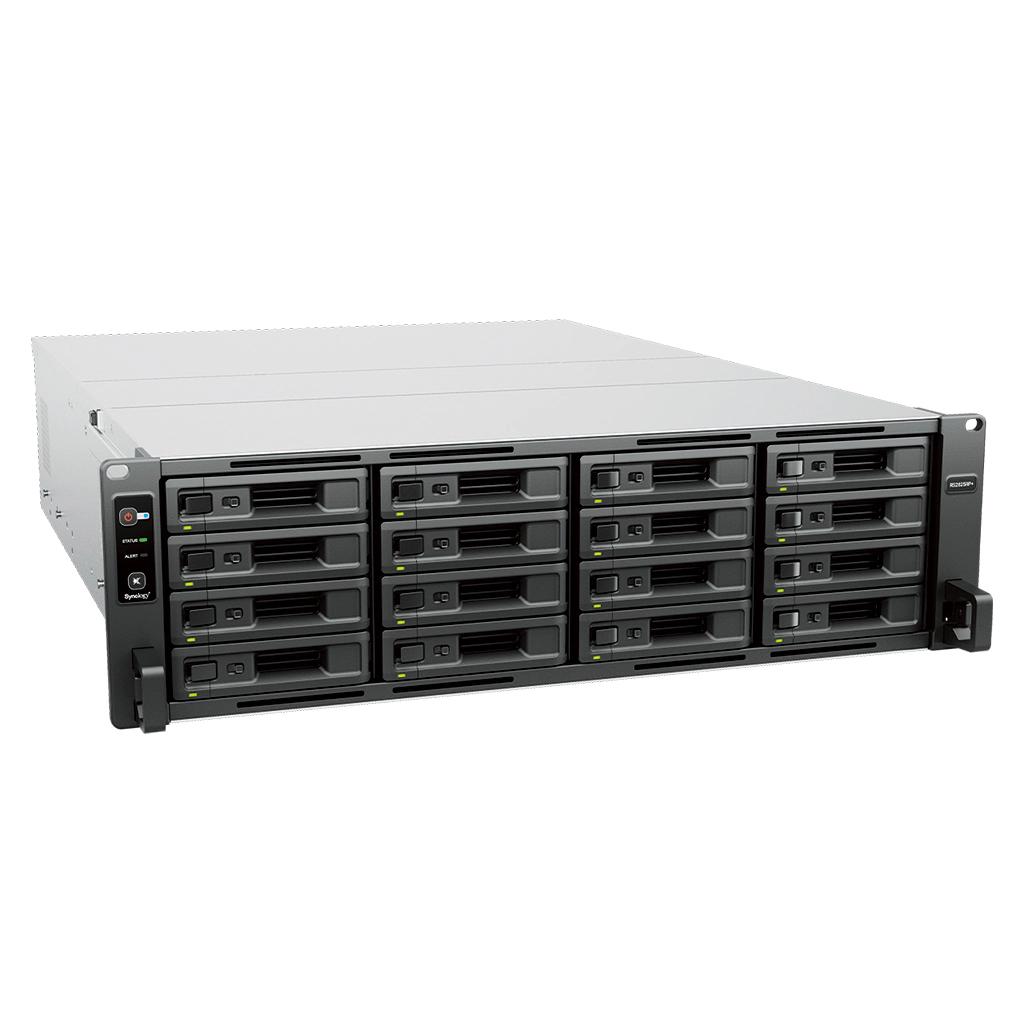
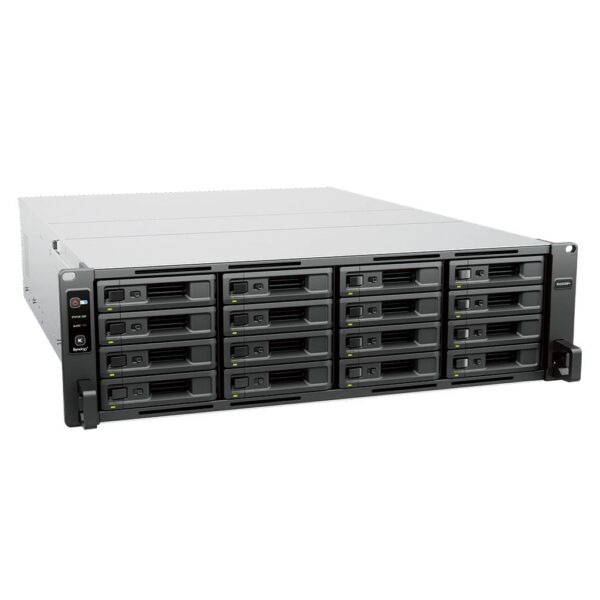
The Synology RS2825RP+ offers 16 drive bays supporting both 3.5″ HDDs and 2.5″ SSDs, allowing flexible storage configurations. It can expand up to 28 bays with an expansion unit, providing up to 560 TB of raw storage, making it suitable for large-scale data environments.
Connectivity & Compatibility
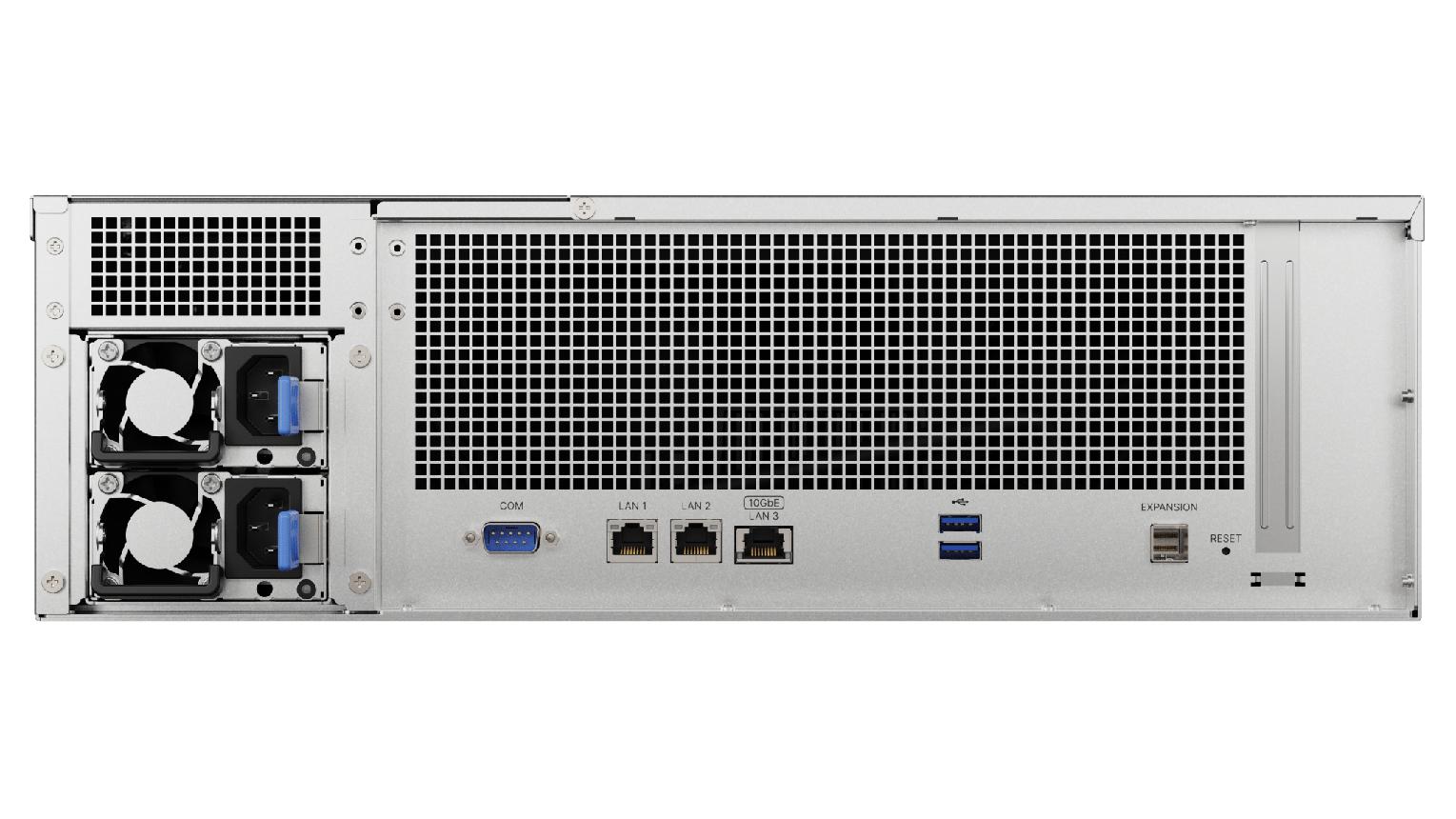
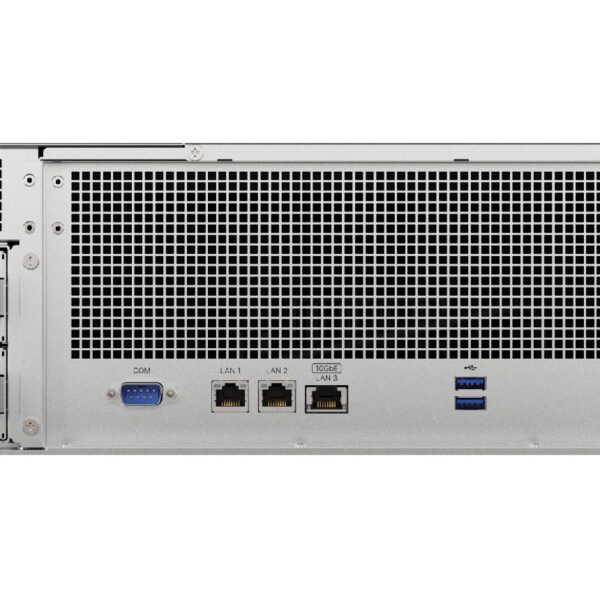
This system includes built-in 10GbE connectivity and dual 1GbE ports, ensuring high-speed networking out of the box. It also features a PCIe expansion slot for adding 1GbE, 10GbE, or 25GbE network interfaces, enabling seamless integration into enterprise networks.
Performance & Hardware
Powered by an AMD Ryzen V1780B quad-core processor with ECC memory, the system delivers strong performance for multi-user environments. It achieves up to 3,519 MB/s read and 1,790 MB/s write speeds, ensuring smooth file sharing, backup, and data-intensive operations.
Software & Ecosystem (DSM)
Running on Synology DiskStation Manager (DSM), the NAS provides a unified platform for file management, collaboration, and system administration. Built-in applications enable file syncing, document editing, communication, and centralized management across teams.
Security & Data Protection
The system includes advanced security features such as encryption, firewall protection, and secure access controls. It also supports immutable snapshots and WriteOnce shared folders to protect against accidental deletion and ransomware, ensuring data integrity and compliance.
High Availability & Reliability
Designed for business continuity, the system features hot-swappable drives, online volume expansion, and redundant power supplies. It also supports Synology High Availability clustering, ensuring minimal downtime and uninterrupted operations.
Key Features & Highlights
- 16-Bay Rackmount NAS – Expandable up to 28 drives
- Up to 560 TB Capacity – High-capacity storage solution
- Up to 3,519 MB/s Performance – Fast data access
- Built-in 10GbE Port – High-speed networking
- AMD Ryzen Quad-Core CPU – Reliable processing
- ECC Memory – Enhanced data integrity
- Redundant Power Supply – Ensures uptime
- DSM OS – Advanced data management platform
- Snapshot & Backup Tools – Comprehensive protection
Hardware Overview
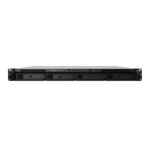
Front Panel
- Power button & indicator
- Status indicator
- Alert indicator
- Alarm silence button
- Drive status indicators
- Drive trays
- Rail kit release tabs
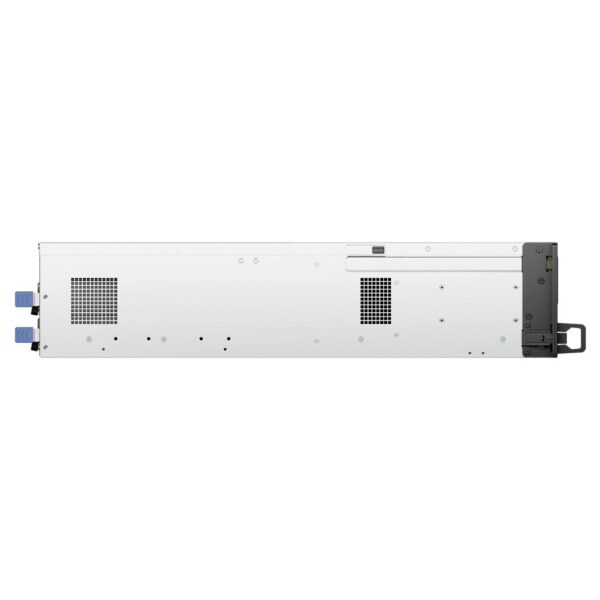
Rear Panel
- Dual power supply units
- System fans
- Console port
- 2 x 1GbE RJ-45 ports
- 1 x 10GbE RJ-45 port
- USB 3.2 Gen 1 ports
- Expansion port
- Reset button
- PCIe expansion slot
Software & Ecosystem
The NAS runs on Synology DSM and supports protocols such as SMB, NFS, FTP, WebDAV, and Rsync. It includes applications like Synology Drive for file synchronization, Synology Office for collaboration, and Active Backup Suite for comprehensive data protection. Virtual Machine Manager and container support enable virtualization and application deployment.
Ideal Use Cases
- Enterprise Storage – Large-scale centralized data management
- Backup & Disaster Recovery – Protect critical systems
- Virtualization Storage – Host and manage VMs
- Private Cloud – Secure collaboration and file sharing
- Surveillance System – Manage large camera deployments
- Multi-Site Deployment – Branch office and remote storage
FAQs
1. How many drives does it support?
It supports 16 drives and can expand up to 28 drives.
2. Does it include 10GbE networking?
Yes, it includes built-in 10GbE connectivity.
3. What is the maximum storage capacity?
It supports up to 560 TB of raw storage with expansion.
4. Is it suitable for enterprise workloads?
Yes, it is designed for high-performance business environments.
5. Does it support high availability?
Yes, it supports clustering and redundant power for uptime.

 HD Cameras and Webcam
 Projectors and Speakers
 VOIP Phones and Gateway
 Access Control
 5G routers and 4G LTE Devices
 Smart Sensors And Automation
 Fiber and SFP Modules
 Firewall & Cloud Controllers
 Network Adapters and Accessories
 Network Switches
 PoE Switches
 Point To Point Wireless Radio
 Routers
 Wireless Access Points
 IP Cameras
 Memory Cards
 NVR
NVR Smart WiFi Cameras
 Storage Devices
 Desktop & Laptop RAMs
 Internal and External Hard Drives
 Storage Accessories and Enclosures
 SSD and NVMe Drives
 USB Flash Drives


 Pick up from the FGTECH Store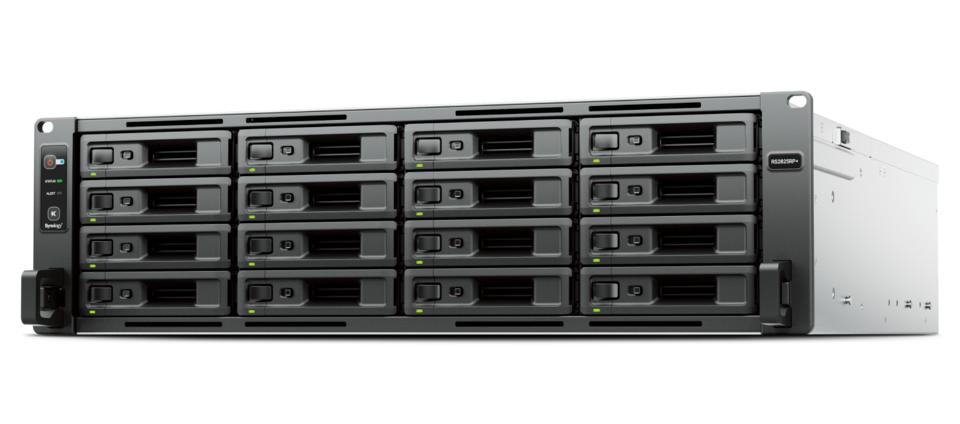
 Pick up from the FGTECH Store
  Courier delivery