
 HD Cameras and Webcam
 Projectors and Speakers
 VOIP Phones and Gateway
 Access Control
 LTE and 5G Devices
 Smart Sensors And Automation
 Fiber and SFP Modules
 Firewall & Cloud Controllers
 Network Adapters and Accessories
 Network Switches
 PoE Switches
 Point To Point Wireless Radio
 Routers
 Wireless Access Points
 IP Cameras
 Memory Cards
 NVR
NVR Smart WiFi Cameras
 Storage Devices
 Desktop & Laptop RAMs
 Internal and External Hard Drives
 NAS Storage & Enclosures
 SSD and NVMe Drives
 USB Flash Drives


-
 Pick up from the FGTECH Store
-
Courier delivery
-
Porter / WeFast
-
Fast Delivery ( By Air )

 Pick up from the FGTECH Store
  Courier delivery
Porter / WeFast
Fast Delivery ( By Air )
Courier delivery
Porter / WeFast
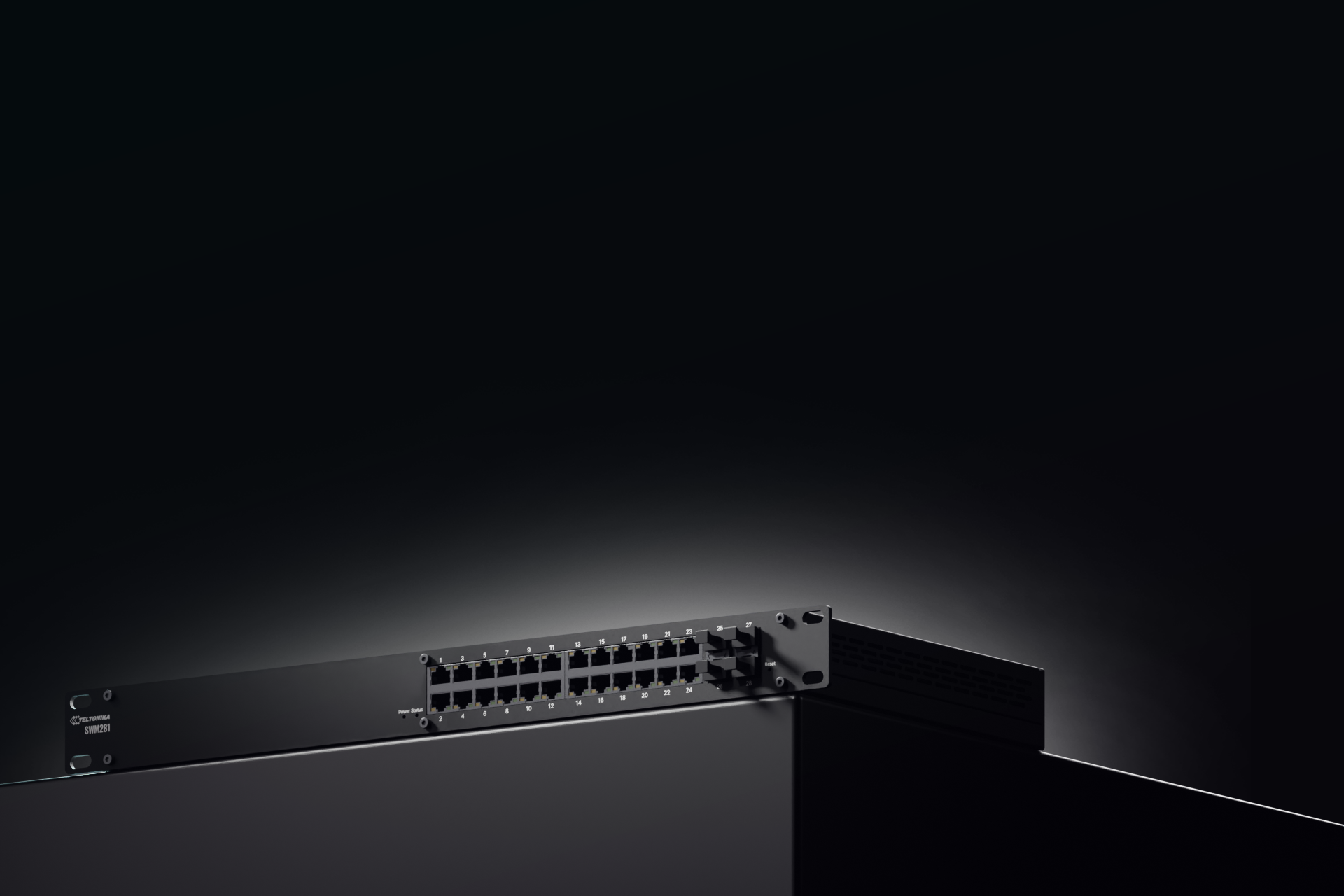
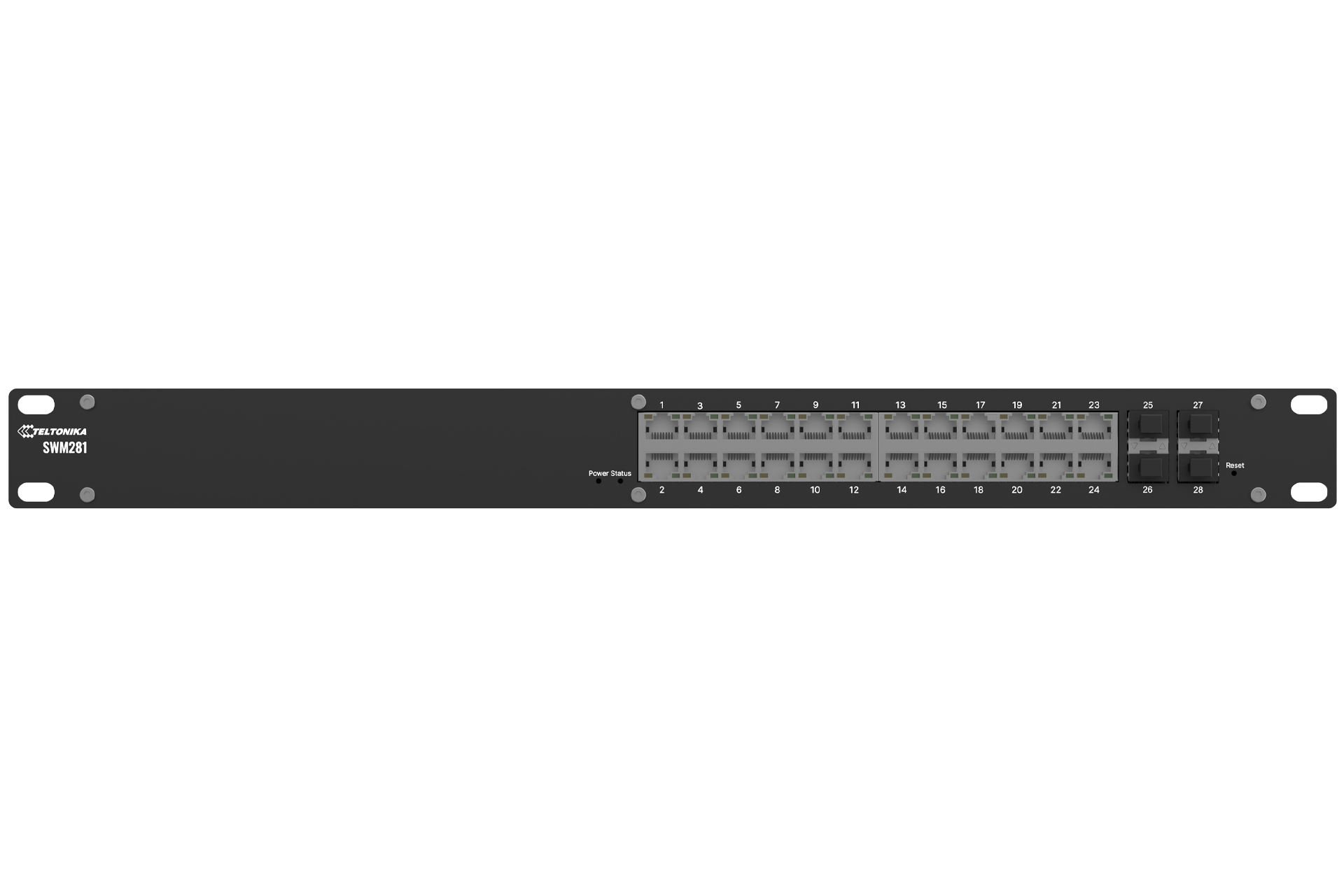
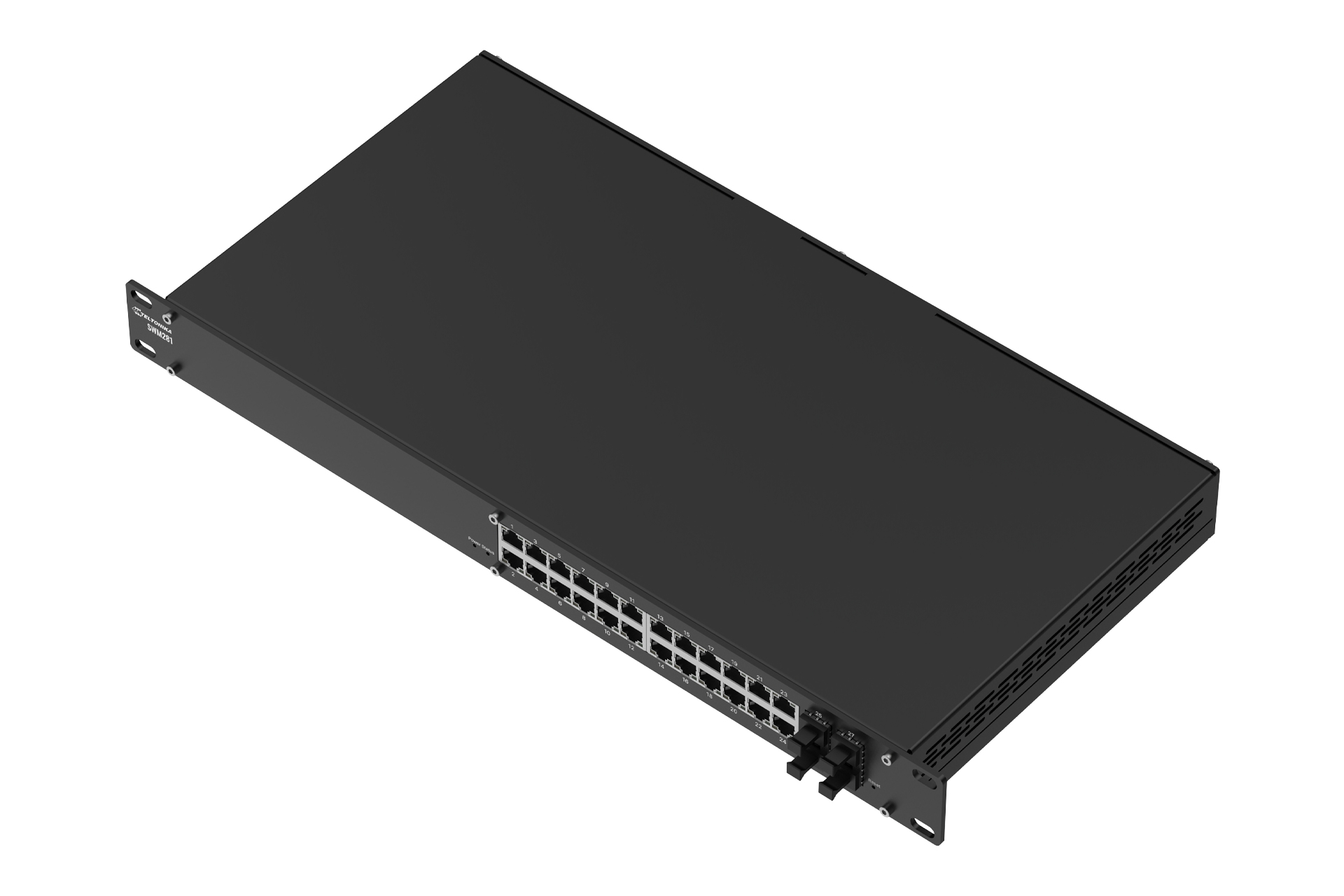
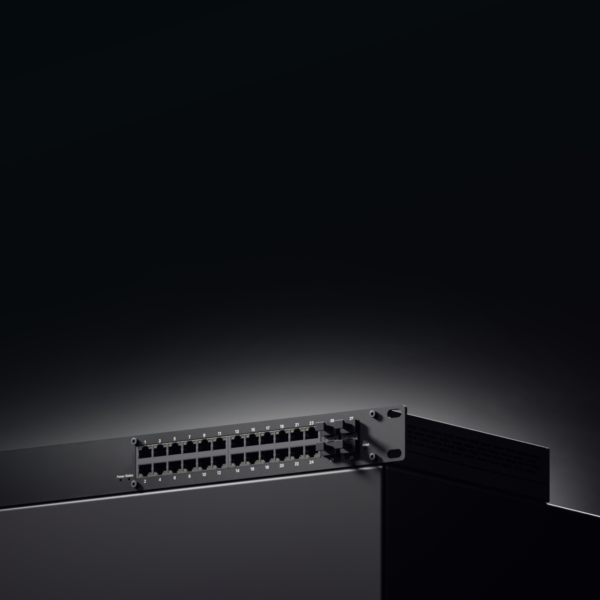
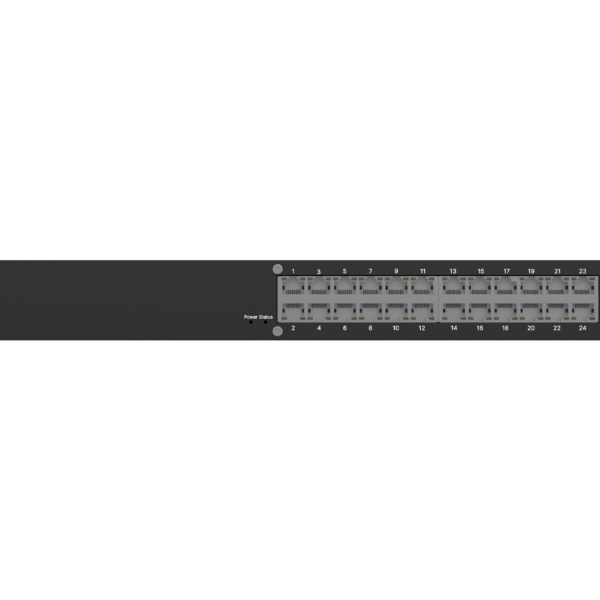
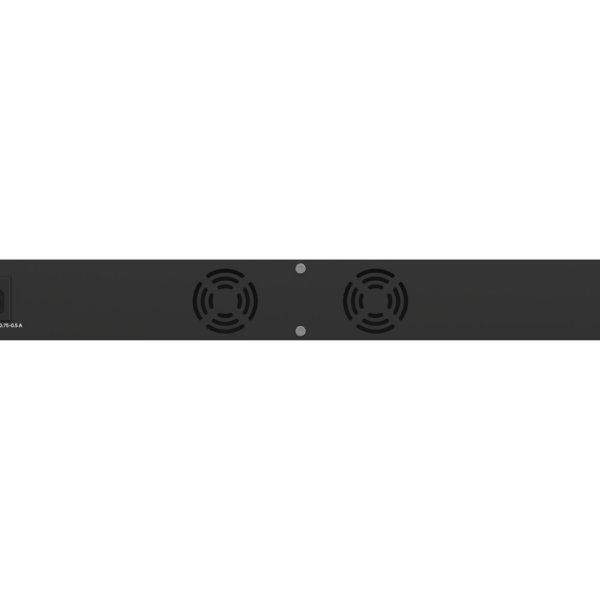
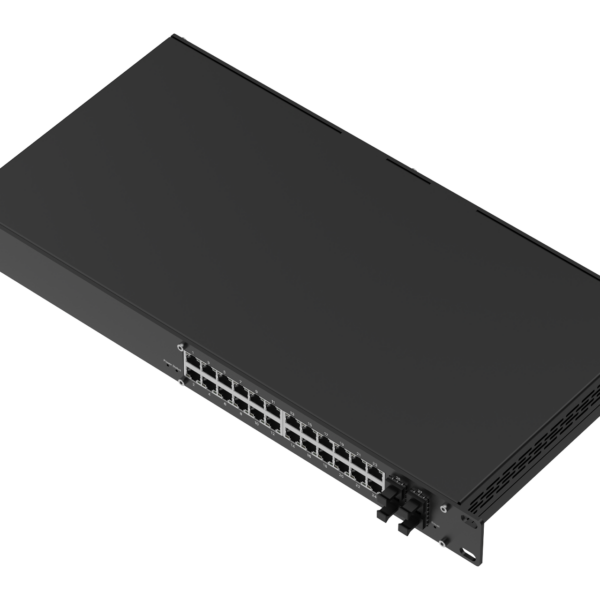
Fast Delivery ( By Air ) The Teltonika SWM281 Managed Gigabit Ethernet Switch is a high-density industrial and professional network switch designed for reliable connectivity, advanced network management, and flexible infrastructure deployment. Teltonika SWM281 it provides 24 × Gigabit Ethernet ports and 4 × SFP ports, allowing multiple Ethernet devices to connect while also supporting fiber-optic links for longer-distance communication.
The SWM281 offers advanced Layer 2+ management capabilities with VLAN segmentation, STP/RSTP, LACP, MRP, IGMP Snooping, port isolation, port mirroring, and DHCP features. Teltonika SWM281 it also supports static IPv4/IPv6 routing and dynamic routing protocols including BGP, OSPF v2, RIP v1/v2, and EIGRP, providing greater flexibility for complex network environments.
For industrial networking, the switch supports PROFINET, EtherNet/IP, and MRP, making it suitable for mixed industrial communication systems. PROFINET Class B conformance is available with the applicable optional order code. Security features include 802.1x port-based network access control, MAC filtering, pre-shared key authentication, RADIUS, TACACS+, and login or IP attempt blocking.
The SWM281 supports QoS prioritization, including port, DSCP, 802.1p, and TOS-based priority, along with scheduling methods such as SP, WFQ, and WRR. Bandwidth control, storm control, and port-based traffic shaping help administrators manage network traffic and maintain reliable data transmission.
With 56 Gbps non-blocking bandwidth, an 83.33 Mpps forwarding rate, an 8K MAC address table, and jumbo frame support up to 10,000 bytes, the switch is designed to handle high-volume network traffic efficiently. Teltonika SWM281 it runs on SwmOS, an OpenWrt-based Linux operating system, and supports management through Web UI, CLI, SSH, FOTA, RMS, and Teltonika Networks Web API.
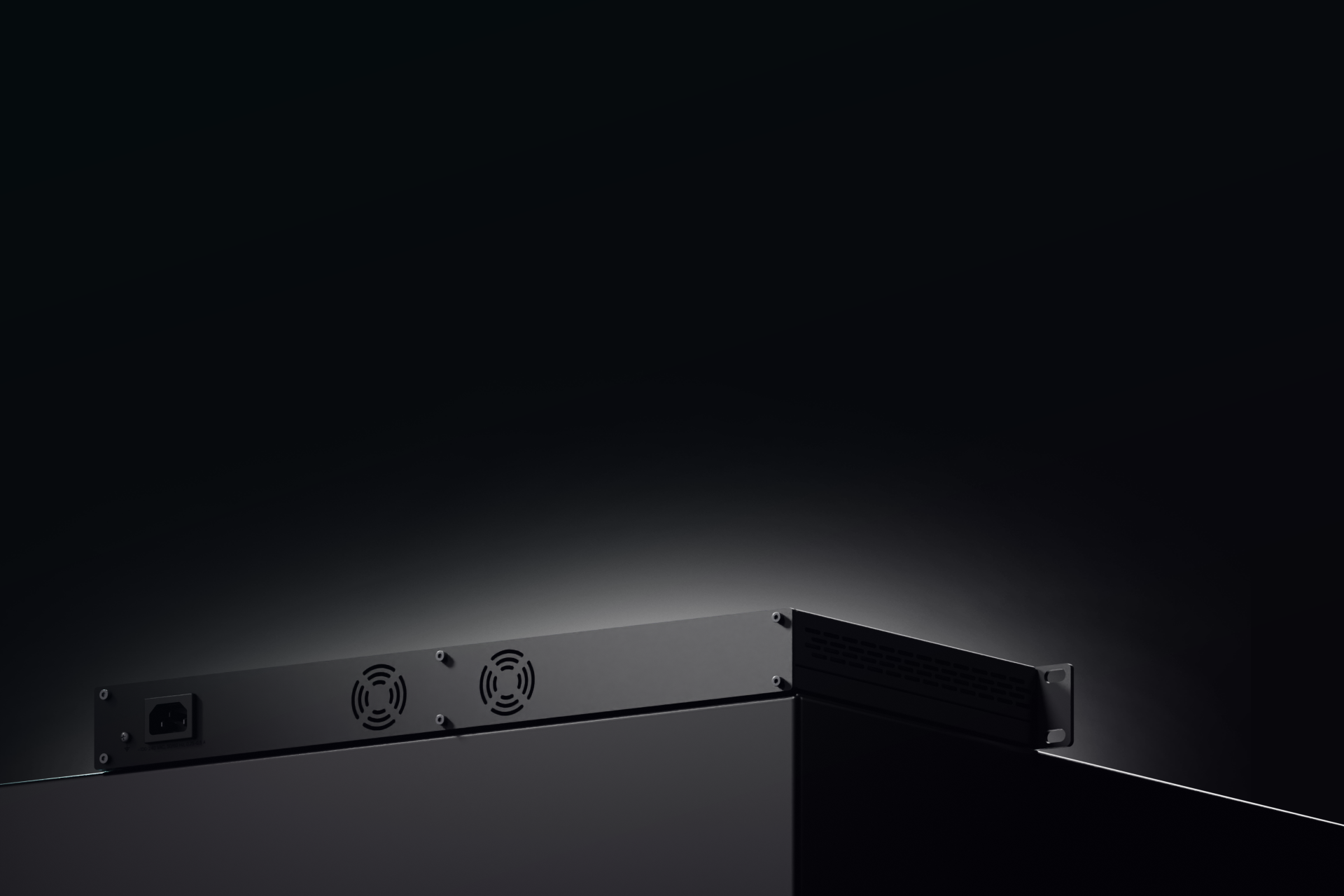
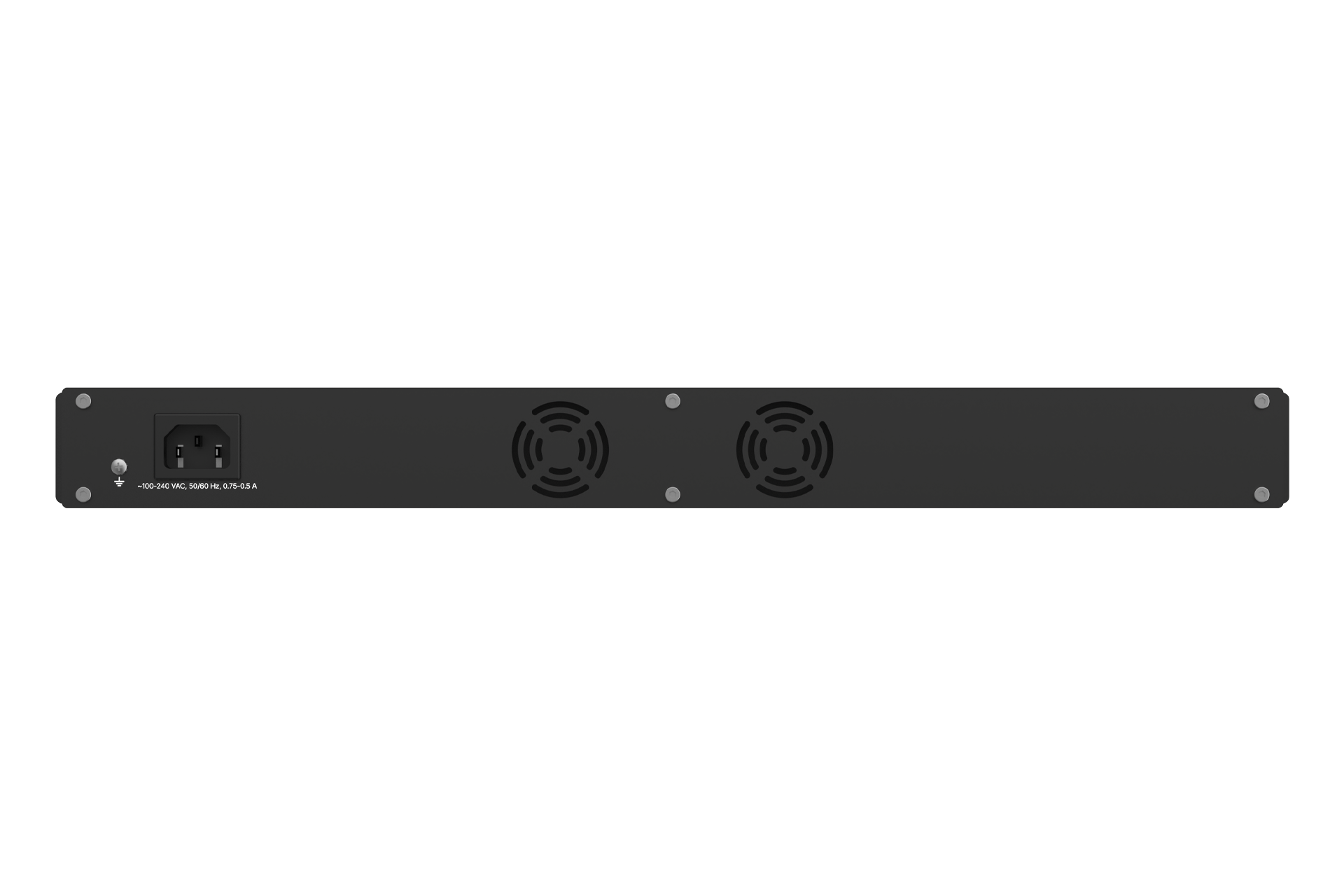
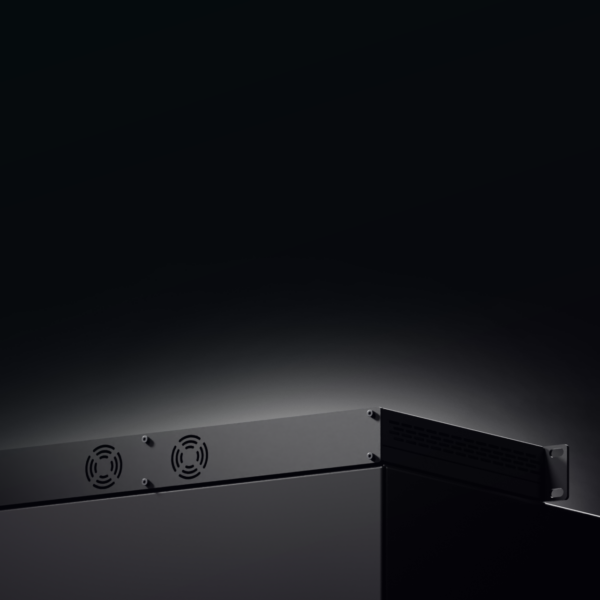
The SWM281 features an anodised aluminium housing, rack mounting design, IP30 protection, and an operating temperature range of 0°C to 50°C. Teltonika SWM281 its 100–240 VAC power input and compact 1U-style rack form factor make it suitable for centralized network infrastructure, industrial control rooms, server racks, and professional communication systems.

| Specification | Details |
|---|---|
| Model | SWM281 |
| Switch Type | Managed Gigabit Ethernet Switch |
| Switch Layer | L2+ with advanced routing features |
| Ethernet Ports | 24 × RJ45 |
| Ethernet Speed | 10/100/1000 Mbps |
| SFP Ports | 4 × SFP |
| Industrial Protocols | PROFINET, EtherNet/IP, MRP |
| PROFINET | Class B conformance available with optional order code |
| Network Management | SNMP v2/v3, LLDP, 802.1p, 802.1x, 802.1Q VLAN |
| L2 Features | VLAN, STP/RSTP, LACP, Loop Protection, IGMP Snooping |
| L3 Features | Static IPv4 Routing, Static IPv6 Routing, DHCPv6 Client, Static IPv6 Address |
| Dynamic Routing | BGP, OSPF v2, RIP v1/v2, EIGRP |
| MRP | MRP Client Role, MRP Manager Role |
| QoS | Port Priority, DSCP Priority, 802.1p Priority, TOS |
| QoS Scheduling | SP, WFQ, WRR |
| Bandwidth Control | Rate Limiting, Storm Control |
| Traffic Shaper | Port-based Shaping |
| Authentication | Pre-shared Key, RADIUS, TACACS+, IP/Login Attempt Blocking |
| 802.1x | Port-based Network Access Control Client and Server |
| MAC Filtering | Supported |
| VLAN Port Separation | Supported |
| Diagnostics | Cable Diagnostic, Ping, Traceroute, Nslookup |
| Management | Web UI, CLI, SSH, FOTA, RMS |
| API | Teltonika Networks Web API (Beta) |
| Operating System | SwmOS (OpenWrt-based Linux OS) |
| CPU | Realtek, 500 MHz, MIPS-4KEc |
| RAM | 128 MB DDR3 |
| Flash Storage | 16 MB |
| Package Manager | Supported |
| Non-Blocking Bandwidth | 56 Gbps |
| Forwarding Rate | 83.33 Mpps |
| Packet Buffer | 512 KB |
| MAC Address Table | 8K Entries |
| Jumbo Frame Support | Up to 10,000 bytes |
| Power Connector | C14 Connector |
| Input Voltage | 100–240 VAC, 50/60 Hz |
| Power Consumption | Idle: 5.5 W; Max: 20 W |
| Status LEDs | 1 × Power, 48 × ETH Status, 1 × Status, 4 × SFP Status |
| Reset | Software Reset Button |
| Grounding | 1 × Grounding Screw |
| Housing Material | Anodised Aluminium Housing and Panels |
| Dimensions (W × H × D) | 48.3 × 4.4 × 23.4 cm |
| Weight | 1.853 kg |
| Mounting Options | Rack Mounting Kit |
| Operating Temperature | 0°C to 50°C |
| Operating Humidity | 10%–90% RH, Non-Condensing |
| Ingress Protection | IP30 |
| Firmware Update | Web UI, FOTA, RMS |
| Package Options | Without Power Cord; EU Power Cord; UK Power Cord; US Power Cord; AU Power Cord |
| Standard Compliance | IEEE 802.3i, 802.3u, 802.3ab, 802.3x, 802.3az, 802.3ad |
In stock
In stock
In stock
In stock
Available on backorder